The automotive-specific sealing strip trends
2026-06-18
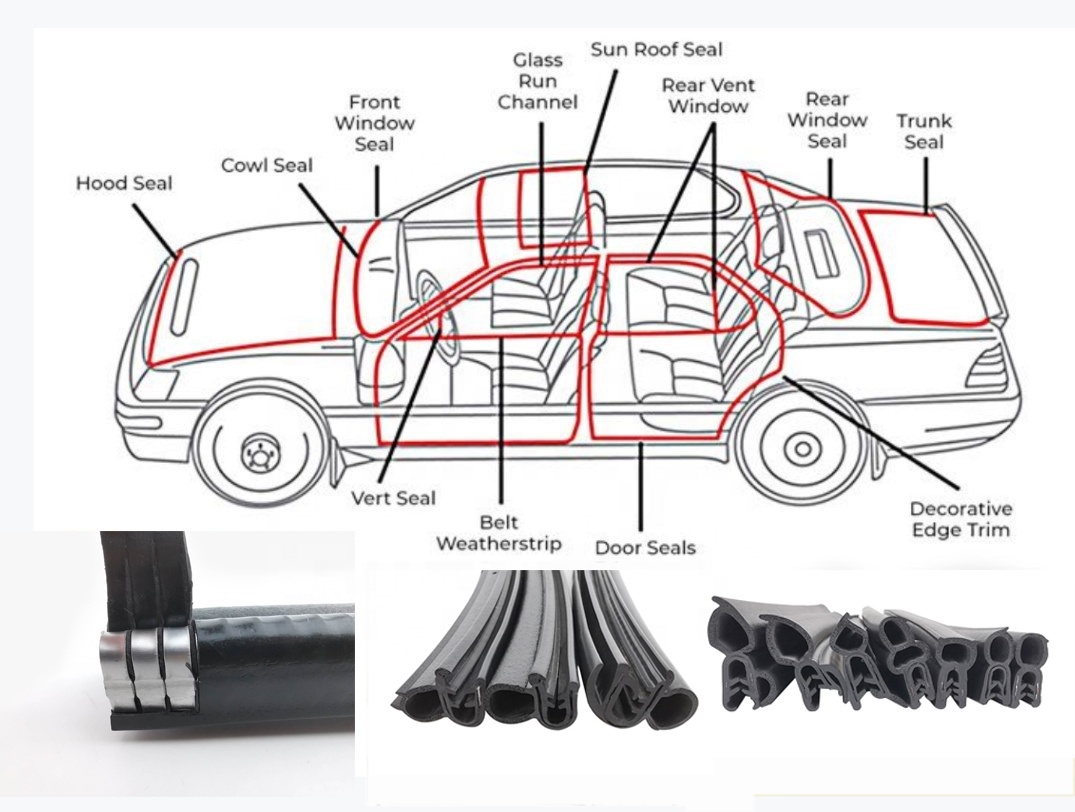
The automotive-specific sealing strip trends
1. The Intense Race for "Extreme Noise Isolation (NVH)" in EVs
Without the masking roar of internal combustion engines, wind, tire, and electric motor noises become sharp and noticeable in electric vehicles (EVs). Car manufacturers have pushed noise, vibration, and harshness (NVH) requirements to strict limits.
Multi-Cavity and Pyramid Structures: Traditional single-cavity or B-shaped rubber strips can no longer meet these high standards. The industry is rapidly shifting toward four-hole, five-hole, and custom multi-layer composite cavity structures. These use air layers inside the chambers to reflect and absorb high-frequency wind noise.
Zero-Squeak (Anti-Squeak) Surface Tech: The frequent gear shifts and instant acceleration of EVs cause subtle chassis twisting, which can lead to friction and squeaking sounds between the rubber strip and the car body. Water-borne polyurethane coatings paired with plasma surface treatment technology have become standard industry solutions. They deliver high wear resistance and a completely quiet ride.
2. Radical Structural Shifts Driven by "Frameless Doors, Gullwing Doors, and Panoramic Canopies
"Modern EVs embrace frameless doors, hidden B-pillars, gullwing doors, and massive panoramic roofs to create a futuristic look. These design choices present major sealing challenges.
Frameless Door Sealing Systems: At high speeds, the air pressure differential can pull a frameless door outward, causing air leaks. The industry focus has turned to high-pre-tension, multi-stage sealing systems (typically 3 layers of defense) paired with automatic window indexing (micro-drop) technology to ensure long-term tear resistance and sealing durability.
Flush Surface Sealing: To achieve an ultra-low drag coefficient (\(C_d \sim 0.20\)), car bodies must be sleek and flat. Traditional recessed channels are being replaced by Flush Designs, where the sealing strip sits completely level with the glass and sheet metal. This dramatically raises the required bar for mold accuracy and installation tolerances.
3. Lightweight Engineering and the Great TPV/TPE Material Shift
A standard rule in the industry states that "reducing vehicle weight by 10% improves EV range by 6% to 8%." As heavy, high-volume rubber components, weatherstrippings have become a primary target for weight reduction and cost-saving efforts.
Microcellular Foaming Technology: By introducing microcellular foaming into EPDM (Ethylene Propylene Diene Monomer), manufacturers can lower the density of rubber profiles from 1.2 g/cm³ down to 0.8 g/cm³ or less, all without losing compression set or elastic recovery.
The Rise of TPV (Thermoplastic Vulcanizates): While EPDM has dominated the market for decades, TPV materials reduce weight by over 20%, require no traditional curing tunnels (saving massive amounts of energy), and are 100% recyclable. Replacing EPDM with TPV in glass run channels and non-load-bearing areas has become the hottest mass-production topic in the industry.
4. "Fully Integrated Sealing" for LiDAR and ADAS Sensors
With the rapid spread of advanced driving assistance systems (L2+ to L4 autonomous driving), vehicles are now surrounded by LiDAR units, optical cameras, and ultrasonic sensors.
Sensor-Grade Integrated Sealing: Sensors generate heat while operating and demand extreme waterproof and dustproof ratings (IP69K). Integrating weatherstripping with sensor brackets, wire harnesses, and built-in heating elements for defrosting is a key R&D focus for top Tier-1 suppliers like Cooper Standard, Henniges, and Saargummi. This ensures accurate sensor perception in extreme cold or heavy downpours.
5. Supply Chain Cost Reduction (VAVE) and "Lights-Out" Smart Factories
Due to the intense price wars among automotive OEMs, severe cost-down pressures are hitting sealing strip suppliers.
Automated Corner Jointing: Traditional corner molding and end-piecing require substantial manual labor for secondary vulcanization. Today, the industry focuses on inline robotic cutting, welding, and 3D molding, creating "lights-out" smart factories that slash labor costs by over 50%.
Multi-Component Co-Extrusion with Inserts: Using triple- or quadruple-extrusion technologies, manufacturers can now extrude stainless steel/aluminum carriers, solid rubber, sponge rubber, and even bright black or chrome decorative trims simultaneously in a single pass. This greatly minimizes the assembly steps required on the OEM assembly line.
Previous:
The next one:
Recommend News


Online Message
We will contact you within one working day. Please pay attention to your email.
Fast track
Contact Us
Contact:Ms.Amy
Mobile: 86-19943495594
Telephone:0319-3252988
E-mail:contact@fmseal.com
Address:Yahu Industrial Zone, Weixian County, Hebei Province